The Group regards transformation as a social, moral and strategic business imperative. Management recognises that, as a responsible corporate citizen, the Group has an obligation to contribute to a more equal and inclusive society – starting within our own business.
Our transformation strategy aligns closely with the objectives of the B-BBEE codes, and we use an integrated approach to accelerate transformation across the five criteria.
Employment equity committees, comprising senior management, drive transformation – including B-BBEE – in the Group. The committees meet quarterly to gauge and manage progress against set targets.
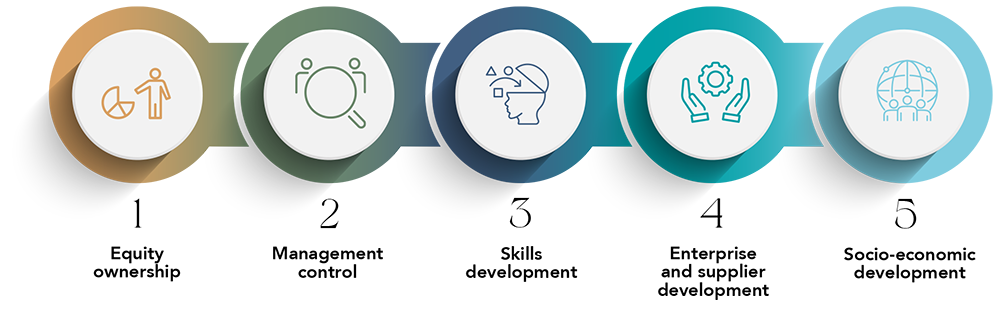
Sustained focus and implementation of a range of meaningful interventions over recent years have enabled the Group to improve its B-BBEE status from non-compliant in 2016 to Level 2 in 2026.
Although every effort will be made to maintain a high score, given continued unfavourable conditions, this rating is expected to remain flat in the year ahead.
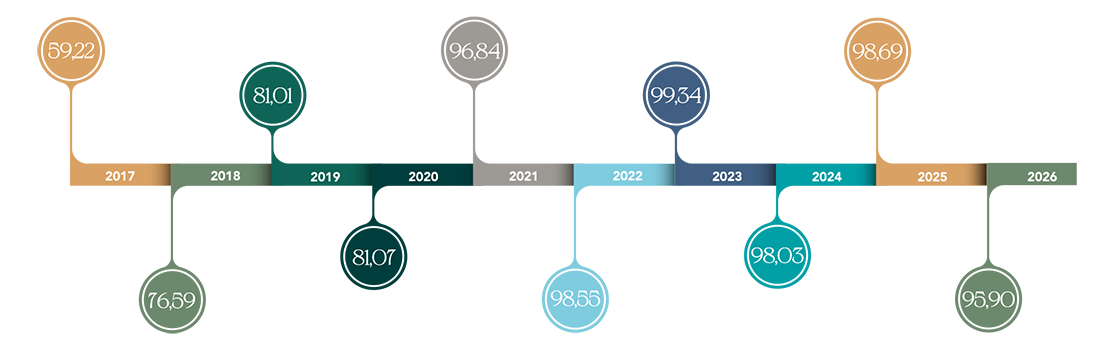
Our B-BBEE verification certificate is published below.
Our qualifying and recognised spend on the B-BBEE scorecard totalled R84 million (2025: R87 million), allocated primarily to:
The Group continued to invest in a range of skills-development programmes focused on employees from previously disadvantaged groups. These included:
In addition to our spend with suppliers with improved B-BBEE credentials (including black ownership), the Group recognises the importance of meaningful enterprise and supplier development initiatives to create jobs and build a sustainable pool of successful black-owned businesses.
In this regard, the Group supports a number of black-owned businesses through grants and/or preferential-rate funding. Beneficiaries of such initiatives include black partners in the TopT franchise network, suppliers of finished goods, service providers and funds focused on investing in and growing black-owned businesses.
Recognised weighted B-BBEE procurement spend on our B-BBEE scorecard was as follows:
| Category | 2026 Rm |
2025 Rm |
2024 Rm |
2023 Rm |
2022 Rm |
|
| Qualifying small enterprises | 710 | 617 | 861 | 759 | 733 | |
|---|---|---|---|---|---|---|
| Exempted micro-enterprises | 880 | 294 | 467 | 121 | 732 | |
| 51%+ black-owned suppliers | 1 620 | 1 616 | 1 567 | 1476 | 1 533 | |
| 30% black female-owned suppliers | 884 | 670 | 786 | 902 | 898 | |
The qualifying and recognised annual value of contributions (predominantly grants and loans) for supplier development and enterprise development for 2026 amounted to R41 million (2025: R46 million).
The Group’s spend on SED exceeded 1% of net profit after tax. The Group also made product and/or cash contributions to eligible schools and charities, with the largest donation to the Foundation. The Foundation is the Group’s broad-based black ownership scheme, aimed at transforming and uplifting previously disadvantaged communities through distributions to public benefit activities related to education, sport and conservation.
The Foundation’s spend of R26 million for 2026 (2025: R26 million) was allocated to the following categories:
Refer to the Foundation’s report.
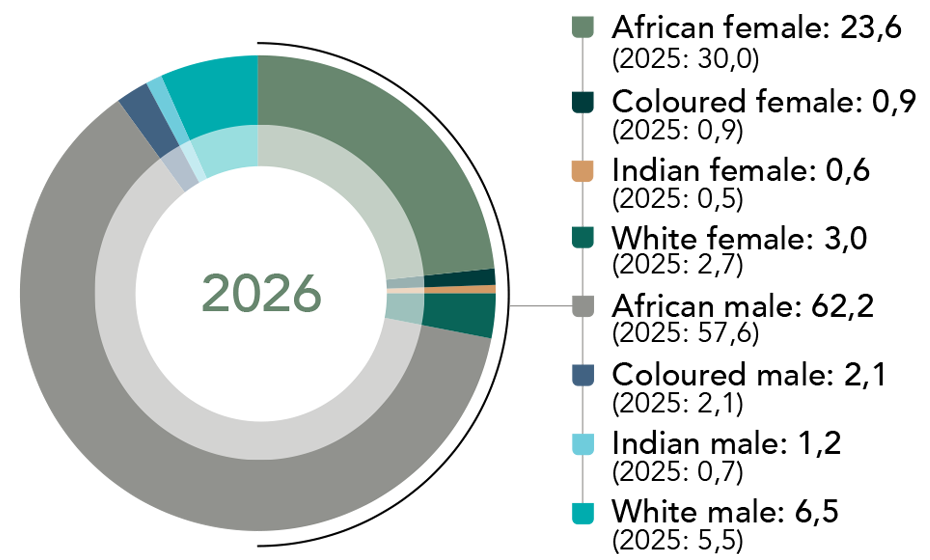
Through our employment equity initiatives, we strive to align with the national statistics on the economically active population where possible. We focus on equal gender representation in recruitment and appointments across the Group, especially at the management level.

Total workforce (%)
The Group will continue to drive its empowerment agenda vigorously. Given the current unfavourable trading environment and concomitant reduced spend in this area, we will strive to maintain and improve our current B-BBEE status level in the year ahead, through the following key initiatives: