

Brandon Wood
Chief Executive Officer
We have taken a clear-eyed view of the year’s performance. Some pressures were market-driven, but some were within our control, and we are responding accordingly through targeted operational and leadership interventions.
It is my privilege to present my first report to stakeholders in my capacity as Chief Executive Officer of Italtile. I do so with a full appreciation of the responsibility that accompanies this role to serve our business, customers, partners and our people diligently and effectively, while upholding the values and culture that are fundamental to our success. I thank the Italtile Board, Mr Ravazzotti and our Chairperson for the trust placed in me.
I would also like to extend my sincere gratitude to Lance Foxcroft, the outgoing CEO, for his support during the leadership transition and for his guidance and friendship over the years we have served together on Italtile’s executive team. These are indeed big shoes to fill.
A weak construction sector and financially constrained consumers have continued to create a challenging operating environment for manufacturers and retailers of tiles and bathroomware. This was compounded by structural excess capacity in the sector, which is intensifying aggressive competition across both manufacturing and retail. Under such conditions, sustained industry leadership depends on experience, disciplined execution, differentiated offerings, and the strength of trusted brands.
Leading brands and world-class manufacturing assets are not built overnight. They are products of years of investment and the ongoing commitment of every employee to delivering customer satisfaction at every touchpoint. In the same way, maintaining lowest-cost producer status demands an unrelenting focus on efficiency, productivity and cost leadership.
I commend all our people for the dedication they bring to this ambition every day. At the same time, we recognise that there is still much more we can and must do.
At a macro-economic level, the South African economy was on a more stable footing in the past financial year than it had been in several years, recording modest growth over six consecutive quarters to June 2026. Activity within the construction sector remained subdued. Encouragingly, the value of building plans approved had begun to recover from a low base since November 2025, suggesting that underlying interest in new developments persists despite generally constrained business conditions. In contrast, a recent consumer affordability study indicates that consumers are prioritising essentials and deferring discretionary spending such as DIY projects, reflecting persistent affordability pressures in this category.
The conflict in the Middle East tempered the momentum. The resulting sharp increase in fuel prices had a direct adverse effect on both the sector and the broader economy, raising production and distribution costs, weakening business and consumer confidence and contributing to project postponements. In most cases, companies had to pass the higher costs on to consumers, adding to inflationary pressures and increasing the likelihood of higher interest rates.
Manufacturing production remained under pressure for most of the year. Although energy reliability improved, persistent gridrelated challenges continued to affect production performance and operational efficiency.
Inflation averaged 3,2% in 2025, its lowest level in more than two decades. This trend reversed in 2026, following the outbreak of the conflict in the Middle East. Headline Consumer Price Index (“CPI”) inflation increased to 5,0% in June, with price pressures concentrated primarily in the transport and energy categories.
Consumer confidence remained fragile throughout the period. Higher fuel prices, rising inflation and the recent interest rate hike further strained household budgets, particularly among middle- and higher-income consumers. Lower-income consumers, while having the least capacity to absorb these pressures, showed comparatively greater resilience in their spending patterns.
African markets showed mixed performance, with most markets remaining resilient, apart from Botswana, which faces significant economic challenges.
However, the Group’s modest performance cannot be attributed solely to external factors; some challenges were within our control. While market conditions intensified the pressure, our response could have been faster and more effective, particularly in manufacturing. In some cases, poor planning resulted in unmet demand and lost sales.
We know what is required to prevent a recurrence and capture the meaningful opportunities available. The necessary initiatives are already being implemented, including strengthening the Manufacturing team. Updating and reinforcing training for our people will also be a key focus this year.
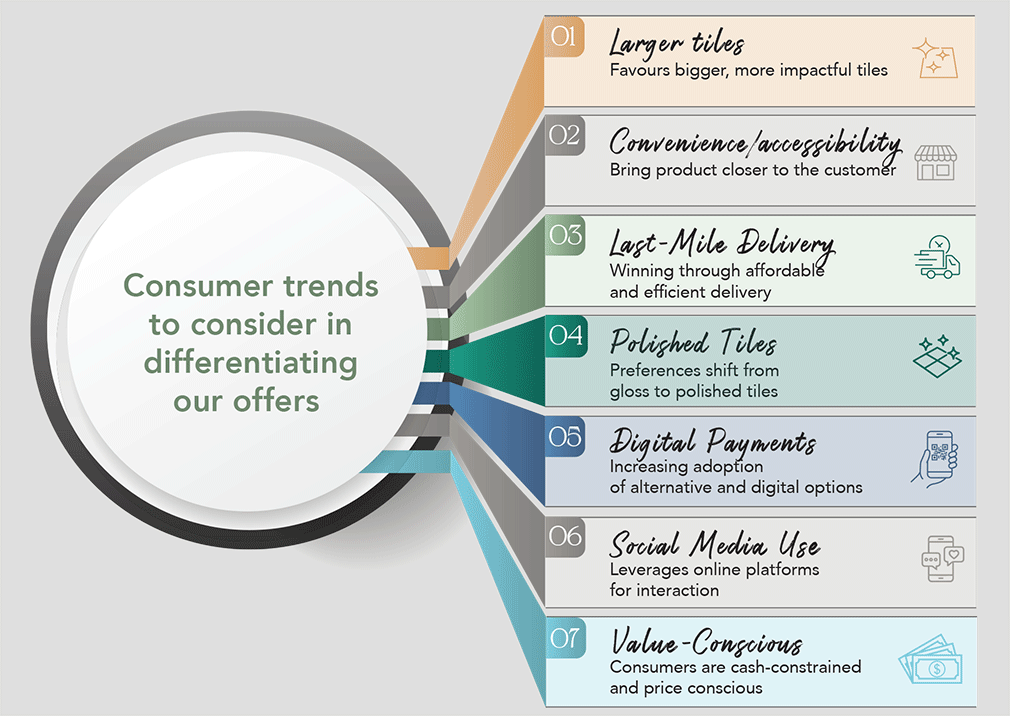
South African consumers remain highly price-sensitive amid rising living costs, prioritising essential needs and balancing affordability with trusted quality and value. This has resulted in increased promotion-seeking, greater switching to lower-priced brands, smaller basket sizes and more disciplined discretionary spending. At the same time, expectations of a quality shopping experience continue to rise.
Customers are increasingly choosing an omnichannel route to purchase, using digital and social media platforms to research products and compare prices before visiting stores to view products in person. Social media continues to influence brand perception and purchasing decisions. We remain focused on providing convenient shopping options and ensuring customers enjoy the same differentiated sales experience across all channels. Our online content continues to support DIY customers with inspiration, guidance and advice, while growth in unique visitors and transactions reflects the value of our continued investment in this platform.
Closely linked to digital and mobile-first shopping is the growing demand for a broader range of convenient and secure payment options. Adoption of digital wallets, instant payment methods and Buy Now Pay Later solutions continues to increase. In response, we have expanded payment options across the Group and continue to evaluate new solutions that improve the ease and speed of purchasing and fulfilment.
Delivery cost and convenience are playing a growing role in purchasing decisions, with customers expecting reliable and affordable last-mile delivery to homes and building sites. We aim to use Group logistics synergies as a competitive advantage to reduce delivery costs and enhance the customer experience. Our vertically integrated model already supports this through direct servicing of Group stores and third-party customers by our Manufacturing and wholesale divisions, leveraging our transport, vendor-managed inventory and logistics capabilities.
Retail expansion is continuing beyond major metropolitan areas, driven primarily by the demand for convenience. In these markets, transport costs remain a significant purchasing factor alongside price and quality. This is particularly relevant in TopT’s entry-level market, where customers value convenient, affordable access in their local communities. We remain committed to delivering the same quality and shopping experience in these areas and customer support has been very encouraging. Even in urban markets, the continued shift toward convenience retail suggests that the future network may include more smaller-format stores.
Our online store further supports the convenience trend by extending access to new locations and enabling omnichannel fulfilment through our existing store network.
Consumer preferences are also evolving, with growing demand for larger-format tiles and polished finishes over smaller or gloss alternatives. We continue to import a leading range of larger-format and specialised finished products for customers seeking distinctive and differentiated offerings. In addition, our development team has created a range of larger-format rectified products for manufacture at the Vitro and Gryphon factories, while also launching a range of polished porcelain tiles to compete with increasing imports.
We strive to excel on each of our points of differentiation, which include leading fashion, wide ranges, guaranteed quality, exceptional customer experience, stock availability, expert advice, omnichannel sales and leading systems through our vertically integrated operating model.
In a shifting global environment, excess capacity and weak demand have pressured tile manufacturers worldwide, leading many to pursue new markets and, in some cases, use uncompetitive practices and predatory pricing to gain market share.
Across the region, competition in tile manufacturing and retail remained intense. Production capacity within the Southern African Development Community (“SADC”) far exceeds consumer demand, with factories established in Zambia, Zimbabwe, Tanzania and Mozambique in recent years, supported by attractive investor incentives. This underscores South Africa’s challenging and comparatively unsupportive investment climate for manufacturers. We estimate that current production capacity in Southern Africa is roughly double the market demand. Combined with product dumping from other regions, this imbalance has continued to drive price deflation and margin pressure.
Export opportunities to neighbouring countries have also narrowed as more markets (Zimbabwe, Mozambique, Zambia and Kenya) introduced trade barriers to protect local industries. South Africa has remained one of the least-protected markets, contributing to significant dumping locally. In this context, we welcome the July 2026 announcement by the International Trade Administration Commission of South Africa (“ITAC”) imposing provisional anti-dumping measures on ceramic and porcelain tiles imported from India, Mozambique, Zambia and Zimbabwe to protect the local industry.
The tile adhesive industry has likewise seen growth in producers offering inferior, low-priced products. Ezee Tile remains one of the largest suppliers of adhesives and related products in South Africa. The Company’s quality range, strong brand reputation and after-sales service have protected the business from the worst of this competition, although it has still constrained potential growth.
We managed this challenging environment by keeping operations lean, efficient, innovative, cost-competitive and flexible. Achieving this requires leadership, expertise and continuous, disciplined operational optimisation. Ceramic Industries’ investment in rectification technology at the Vitro and Gryphon factories complements our development of large-format rectified products and polished porcelain tiles, which were finalised in the current period and will compete with imports as demand for rectified and polished products continues to grow. We continue to launch new, fashionable ranges, while ongoing technology upgrades help ensure our products remain relevant, competitive and high quality.
Italtile is proud of its extensive network of more than 210 stores, including a state-of-the-art e-commerce platform. The Group continually reviews its store network to identify opportunities for growth and flag stores that may require upgrades, relocation and/or closure. In the current year, the Group upgraded one Italtile store, successfully relocated one CTM store to a better site and opened three TopT stores to serve untapped markets and gain additional market share, while closing 1 TopT store. The Group also disposed of four non-viable sites that will not be developed.
To defend market share in the retail portfolio, we focused on remaining responsive to market requirements, leveraging our world-class technology to improve quality and drive product innovation, continuing our efforts to strengthen our selling skills and delivering an exceptional customer experience. We also prioritised greater efficiency at every customer-satisfaction touchpoint: fashion, presentation, range, value, service and quality.
The continued growth of new tile retailers, including regional chains expanding their footprint, is placing ongoing pressure on margins. Trends in the tiling sector reflect broader retail shifts, with smaller store formats and increased expansion into semi-urban and rural areas. However, quality retail space in these areas remains difficult to secure. We are investigating the viability of small-format stores in response, where we have developed successful pilot examples but no firm commercial model yet. The Group is also considering exiting unprofitable or challenging regional markets. We continue to prioritise the right stores in the right locations, rather than simply increasing the store network.
We continually assess the balance between franchise, joint-venture (“JV”) and Company-owned stores, considering each geography and prevailing market needs. This ensures that our customer offering remains strong, while the business is appropriately served in each market. During the year, we franchised selected corporate stores and converted others into JV stores to strengthen their management and performance. We also revitalised franchise stores in one region by appointing long-standing, successful franchisees as the new partners, a change that is already delivering improvements.
The growth of informal retailers supplied by new manufacturing competitors, particularly in rural areas, has intensified competition for our TopT brand in the entry-level market. TopT is well regarded as a conveniently located, community-centred brand that serves the entry-level market with a broad range of complementary homefinishing products, supported by quality assurance and strong customer service. The Group’s strong buying power enables customers to access a wider range, better prices, guaranteed quality and reliable after-sales service. Our strategy is to build on our established strengths in this market and continue expanding the TopT footprint.
Outside South Africa, we reopened a refurbished CTM store in Eswatini. CTM operates 25 stores across the rest of Africa, including four webstores. Namibia delivered robust market performance, although execution needed improvement; the appointment of a new regional leader is already showing benefits. CTM Zambia performed well, while the Kenya and Tanzania stores delivered good results despite political uncertainty and constrained discretionary income. Botswana’s economy remained under significant pressure, mainly due to weakness in its mining sector.
In summary, FY2026 delivered stable performance across most business units, with revenue, margins and profits broadly maintained despite a very challenging operating environment. Ceramic Industries was the exception, placing significant pressure on Group results. Our working capital management programme gained good traction, with notable progress in CTM and Ceramic Industries in particular. Inventory turns and stock quality also improved year on year.
Retail sales lifted by 0,4%, while Retail margins increased by 0,5% due to improved profitability on imported products, better buying and favourable exchange rates. The webstore platform was a highlight, with higher activity increasing profitability, supported by an excellent contribution from the Namibian webstore.
In the Manufacturing division, Ceramic Industries continued to face intense competition from excess regional manufacturing capacity and imports, affecting both sales and profitability. Compared with the prior year, sales declined by 1,1% and margins remained under significant pressure. Overall stock balances reduced pleasingly, supported by disciplined stock management and a focused effort to ensure inventory quality aligned with supply-chain demand.
In the first half of the year, management identified an inconsistency in Ceramic Australia’s internal monthly reporting. The completed forensic investigation found intentional manipulation of results by the person responsible for the Australian accounts. Both internal and external parties were investigated and no evidence of asset misappropriation was identified. The AU$7,6 million negative impact was fully adjusted for, with no prior-period adjustments required. Remedial action was taken following the investigation, including strengthening relevant controls and processes. The individual concerned subsequently left the business, and appropriate legal steps were taken in relation to Company assets and shareholdings. The findings of the forensic investigation have been formally recorded.
While we can confirm this was an isolated event, we acknowledge that it should never have happened. Our Board and management team have taken appropriate steps to strengthen governance and the operating and accounting function framework in the Australian operations, to help prevent a recurrence. Importantly, aligned to the NCI Australia enquiry, we conducted a comprehensive review of systems and processes in the wider Group and can confirm that they are robust and in line with best practice.
Given the significant capital expenditure on the new rectification line and the business’s weak performance, the Group provided additional cash support of AU$4,5 million during the year. Italtile is reviewing its continued presence in Australia and is in advanced discussions with a prospective buyer, with the due diligence process ongoing.
In the Integrated supply chain, revenue from the Group’s import businesses – Cedar Point, International Tap Distributors (“ITD”) and Distribution Centre (“DC”) – decreased by 6,4%, mainly due to the sales decline in the retail businesses. Gross margins improved in the Cedar Point and ITD businesses due to exchange-rate gains and improved buying, enabling them to absorb higher energy costs and benefiting customers.
Operating profit margin remained attractive at 23%. Despite margin pressure and continued capital investment, share buybacks and high dividends, the Group maintained a strong cash position, with cash balances at 30 June 2026 of R1,7 billion (2025: R2,2 billion).
Headline earnings per share (“HEPS”) decreased by 9% to 113,4 cents. A final gross ordinary dividend of 21 cents per share has been declared, bringing the total ordinary dividend for the year to 45 cents. The Board has also declared a gross cash special dividend of 25 cents per share from income reserves.
We invite you to access more details on the financial results in the CFO report.
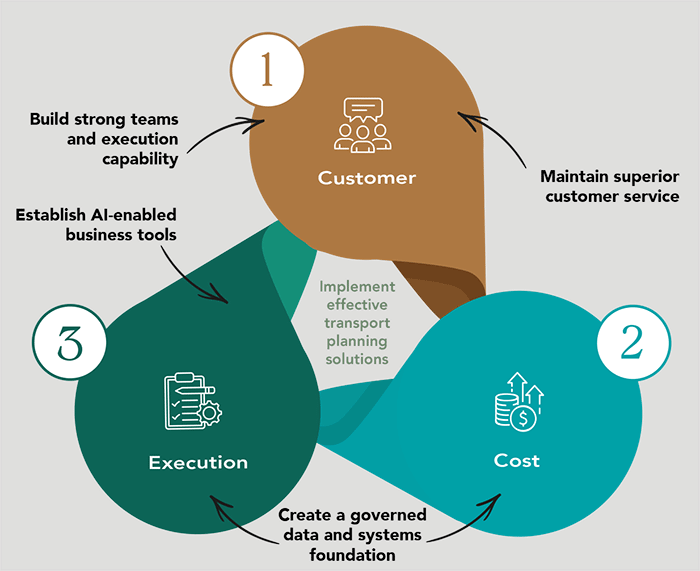
Our short-term strategic response is focused on three dimensions:
The current macro environment does not support rapid topline growth and conditions remain uncertain and volatile due to global geopolitics and regional trade developments. Italtile’s strategic response is to shorten our immediate planning horizon to remain agile, focus on the levers within our control to generate value for stakeholders over the short to medium term and continue building the fundamentals that matter: our teams, brands and the quality and efficiency of our assets for the long term.
Organic growth will be driven by continuing to extend our leading brand positions in Southern Africa, building stronger teams and management depth and ongoing investment in new product development and excellent customer service. We will continue to leverage Group synergies across our vertically integrated portfolio of complementary businesses.
Once these fundamentals are stronger, we will be better positioned to plan confidently for the longer term, capitalise on improved economic conditions and pursue more ambitious growth initiatives.
We intend to strengthen leadership depth and daily execution across stores, factories, operations and support functions. This includes prioritising key leadership capacity, including the recent appointment of a CTM brand leader designate with extensive retail experience and the recruitment of senior leaders to oversee all manufacturing operations. Embedding a culture of accountability, ownership and a results focus is core to our DNA. It is delivered through small, close-knit, highly-motivated teams working toward shared goals within the vertically integrated business. Effective recruitment and continuously refreshed training and development are essential to this process and will receive additional focus this year. People management processes also remain a priority, with several payrolls consolidated this year to improve operational efficiency and an employee communication platform launched to support transparent, effective communication.
Further, we intend to reduce siloed thinking amongst business units and continue to improve collaboration across the Group to further unlock vertical integration strength.
Each of our brands is expected to pursue excellence in every aspect of customer satisfaction. Our focus will be on refining product ranges, improving in-stock availability, strengthening store execution, raising service standards and delighting customers through presentation and displays. Disciplined training, store audits, customer feedback mechanisms and clear service consequences support this. Where needed, mystery shopping frequencies are increased for better service insights.
Retail excellence and sales training remain core disciplines across the Group. Entrenching execution discipline, pride and care is critical to providing an unrivalled shopping experience. Together with valuable after-sales support, we aim to add value through multiple points of differentiation: low prices, trusted quality, meaningful warranties and product service experts.
Logistics is a critical enabler of omnichannel growth and a key driver of customer satisfaction and cost savings. A priority for the year is the nationwide roll out of an enhanced last-mile delivery solution in South Africa to improve the customer experience across our store network and webstores significantly. Successful execution depends on reliable, cost-effective fulfilment with tracking, good customer communication and strong performance management. We are developing a clear strategy to improve Group-wide logistics, route planning and truck utilisation, reducing costs and supporting the Group’s demand-driven approach.
AI tools are being implemented for online customer engagement, productivity, planning, analytics and reporting. AI has also been incorporated into our customers’ digital experience, improving imaging quality, content and search functionality. AI-enabled demand planning and forecasting will support procurement decisions and improve forecast accuracy, production planning, in-stock availability and stock turns. These initiatives are intended to further enhance customer service, reduce costs, lower inventory and improve cash flow.
Italtile aims to establish a single source of critical master data, with clear ownership for its quality, maintenance and standards. Stronger data governance and connected platforms will allow reporting to shift from manual administration and reconciliation to timely, action-oriented insights that support better operational and commercial decisions.
The detailed performance of our business units is discussed in the Review of Operations report.
The gross domestic product (“GDP”) growth outlook for South Africa remains modest and subdued. Looking through the cycle, we are confident in the long-term attractiveness of our sector. We believe we are doing the right things to future-proof our business through experienced leaders, well-trained and motivated people, the implementation of effective technology and ensuring that we remain responsive to changing trends and continue to exceed our customers’ expectations.
Our view of the next twelve months is tempered by the impact of the ongoing Middle East conflict on costs and consumer affordability and by caution in the months leading up to the next local government election, when uncertainty and the risk of civil disruption have in the past tended to dampen investment. We expect these headwinds to subdue growth, margins and profitability in the year ahead. We believe that a disciplined focus on the controllable aspects of our business and our strategic levers will build a strong foundation to successfully capitalise on opportunities when the trading environment improves.
We will continue to build strong teams across the business to support us in realising yields, improving productivity, reducing waste and costs and competing sustainably.
We believe the implementation of our AI projects will enhance Italtile’s competitive ability in customer service, logistics and inventory management.
As part of our ongoing review of our asset base, we may consider disposing of assets that do not meet our risk, return and growth criteria.
Management will evaluate the impact of the provisional anti-dumping measures on ceramic and porcelain wall and floor tiles, introduced by ITAC on 10 July 2026. These will remain in place for six months and expire on 9 January 2027. Although the provisional anti-dumping duties are encouraging, we do not expect an immediate or complete improvement, as imported stock already in the country must first work through the market and circumvention risk remains a factor to monitor closely. The short duration of the tariffs is intended to allow ITAC to finalise its investigation. We will continue to engage with the authorities to secure the government’s support for a lasting market solution against dumped products from neighbouring countries.
We will monitor and adapt to external market and regulatory changes, particularly in export markets, which we believe may be further impacted by retaliatory tariffs, as well as ongoing energy risks.
The immediate threat to natural gas supply has been delayed following Sasol’s announcement of extended supply to June 2028, yet securing a sustainable and competitively priced energy source remains critical. The coal-fired HAG project to heat the Gryphon spray driers is underway. It is expected to be commissioned in January 2027 and will provide a valuable understanding of the technology and operational experience. While it is anticipated that the project will yield meaningful savings, it will not be transformative for overall energy costs.
Ceramic is also extending its existing solar energy plant in Vereeniging. The 10 MW ground-mounted solar Power Purchase Agreement (“PPA”) project has broken ground and is scheduled to come online at the end of December 2026. Ceramic continues to consider several energy sources as reliable, consistent options for its operations. However, coal-to-gas conversion is also potentially becoming a viable option, contingent on plant infrastructure and building internal skills and team capability. While not a primary solution, it is a significant potential pivot to meet gas demands of our factories if other options fail.
Italtile Retail is dedicated to offering innovative, market-leading products that inspire beautiful, personalised living spaces. The passionate team provides expert guidance and creative solutions, supported by ongoing interior design training. This commitment to service and quality keeps Italtile ahead of trends and drives growth in sales and profits.
CTM will continue to prioritise restoring sales growth and increasing market share by strengthening our operations and store teams, improving customer experience, refreshing training material and delivery and optimising our product range, while innovating to develop new, attractive products to supplement our core ranges. We will focus on logistics to enhance customer satisfaction, ensure sufficient stock availability to meet our commitments, improve stock turnover across the system, reduce costs and delight customers with improved last-mile delivery.
TopT will continue to expand its geographical footprint, enhance the look and feel of its stores and be deliberate about locating new stores close to customers, especially in rural areas where suitable sites are hard to find. Merchandising categories will become more focused and strong after-sales services will continue to differentiate the brand. TopT continues to pioneer packaged solutions for its customers. Effective last-mile delivery solutions for TopT and CTM would be vital for differentiating their in-store and digital offers.
We expect the highly competitive environment to continue to challenge Ceramic Industries’ performance and for significant cost increases in fuel and energy to persist while the Middle East conflict continues. Most of the new production lines and new products installed in the past year have been bedded down and some are suitable to substitute imported products. Our focus in Ceramic Industries is on the operational levers within our control: improving capacity utilisation, ensuring product ranges remain relevant, lifting yield and productivity, advancing energy security initiatives, strengthening technical and leadership capability and reducing controllable costs.
While some production challenges have dogged the sanitaryware business, there is an opportunity to invest, improve and expand in this area. In Betta Sanitaryware, the production range was rationalised to simplify operations, increase yield and reduce waste. A robotic dark warehouse, currently in the ramp-up phase, is being commissioned and is expected to significantly improve warehousing and operational efficiency at the site.
Ezee Tile’s new factory in Mokopane will be completed by December 2026 and will start up in January 2027 to avoid production impact during peak season. Ezee Tile will focus on volume growth and improving its sales mix, including the introduction of new products to meet evolving customer requirements. Factory expansion projects in Zimbabwe and Kenya will be initiated to cater for growth in their respective markets.
ITD has made good progress on range improvements for the private-label Tivoli brand and further enhancements will be implemented this year. The focus will be on retail sales market share growth through range enhancement and driving execution of its 24- hour after-sales service customer promise.
Cedar Point will drive sales growth across the store network by leveraging enhanced affordability and fashionable product ranges. A key point for both supply-chain operators will be to raise customer satisfaction through consistent product availability, supported by AI tools.
Although market conditions remain difficult, Italtile is well positioned through its sound assets, capable and motivated teams, iconic and trusted brands, technology investments, industry-leading products, strong balance sheet and the competitive advantage of a vertically integrated supply chain.
I am confident in what we can achieve in the year ahead. We will respond to the challenging external environment by focusing on internal improvements, leadership development, digital transformation and operational efficiency. Success will require hard work, discipline and resilience; however, we understand what needs to be done, believe we know how to do it and have the commitment and energy to execute, positioning us well for future opportunities.
We are pleased to report that Mr Ravazzotti continues to recuperate and we wish him strength and steady progress in his recovery. He remains an inspiration and guiding light to many in our business and is deeply loved and respected. Having personally mentored a strong leadership team, he leaves us committed to honouring his example by continuing to champion our customers’ right to beautiful homes.
I want to express my heartfelt thanks to our teams for their resilience, commitment and care throughout a very challenging year. Despite the pressures we faced, they remained focused on creating the kind of shopping experience for our customers that sets us apart. I am deeply grateful for the role they continue to play in keeping our business strong, relevant and sustainable.
I would like to sincerely thank our Chairperson, Luciana Langenhoven, for her continued support, encouragement and passion for the business. Her presence, insight and genuine belief in what we are building continue to inspire and motivate us. I would also like to convey my appreciation to our Board members for their guidance, support and ongoing confidence in our strategy and direction.
I am equally grateful to Lamar Booysen, our CFO, for his support, open engagement and willingness to work through challenges together. His partnership and encouragement have been greatly valued.
Thank you to our suppliers and franchisees for the important role they play in helping us serve our customers effectively and contribute meaningfully to our shared success.
Lastly, I would like to extend my sincere thanks to our customers for choosing our brands. They are a constant source of motivation for us to keep improving and delivering beautiful homes.
Above all, it is our people who make the difference. Their strength, skill and determination continue to carry us through difficult times and position us well for the opportunities ahead when conditions improve in the building sector.
Brandon Wood
Chief Executive Officer