Currently viewing: Chief Executive Officer's report and review of operations
Chief Executive Officer's report and review of operations
In the context of sustained economic pressure on disposable income, the Group’s solid performance for the period is largely a reflection of the impact of enhancements made in the business rather than improved sentiment or spend by consumers.
Overview
Operating environment
Despite the improved outlook for South Africa and an initial gain in business and consumer confidence following recent leadership changes in government, the macro-economic environment remained subdued during the review period.
The hope that renewed optimism experienced in the country would translate into an economic upturn failed to materialise and is best illustrated in our sector by the June 2018 FNB/BER Building Confidence Index which declined steeply at the end of Q2 and was at the lowest level since Q2 in 2012, with more than 70% of respondents citing dissatisfaction with prevailing business conditions.
In the context of sustained economic pressure on disposable income, consumers remained restrained in their spend on non-essential items, and discerning in their selection of retailer – with the price/value proposition being a key driver of purchasing decisions.
The Group's solid performance for the period is therefore largely a reflection of the impact of enhancements made in the business during the year which started to gain momentum, particularly in the second six months, as opposed to improved sentiment or spend by consumers.
Over the past 30 years since listing on the JSE and almost 50 years since the Group was founded, Italtile has laid down a strong track record of continued improvement, consistency and resilience. Central to this achievement is our unique business model which has served as a major differentiator in the industry and a strong investment proposition for franchisees and shareholders. The key components are:
- Strategic portfolio of strong retail brands, which appeal to consumers across the income spectrum;
- Integrated supply chain which underpins our policy of 'right product at the right time, place and price';
- Flat, low-cost organisational structure comprising strong teams and unique individuals intimately involved in the operations;
- Recognition that our people are key to our competitive advantage and hence continued investment in them is paramount;
- Strong partnerships with employees, equity partners and entrepreneurial franchisees;
- Reward and empowerment ethos which incentivises personnel to participate in the profitability of the business;
- Extensive property portfolio which comprises high profile, well maintained, aspirational stores, state-of-the-art factories, and productive quarries;
- A customer-centric philosophy which ensures all our activities are centred on keeping them top of mind;
- Long-standing reputation as the industry trend setter and fashion authority, retailing highly fashionable products in all the markets we serve;
- Sustained investment in improving and innovating the shopping experience and ensuring the offering remains attractive to traditional customers and new, emerging homeowners; and
- Concerted focus on developing and employing industry-leading technology in both our retail offering and manufacturing operations.
Scorecard: achievement of key strategic imperatives
In my 2017 report, I outlined management's key priorities for the year ahead. The following account provides an evaluation of the progress we made in achieving those imperatives. Within the business, management's performance is rated according to a scorecard and I have applied the same format to our achievements in the year under review. The scorecard comprises the following categories:
| Superior achieve | Exceeded target | |||
| Achieve | Achieved target | |||
| Under achieve | Failed to meet target |
| Store roll out and revamp programme | Achieve |
At the end of the prior year, I stated that our goal was to open 15 to 20 new stores during the financial year, including at least one Italtile Retail store and three CTM stores. While we fell short of the higher end of the target range, we did succeed in opening 15 stores, including one Italtile Retail store. We are on track to open another 10 to 15 stores in the new financial year. The Property Investment report provides details of the store footprint and capital investment in this portfolio over the year.
| Further improvement of the working capital position through intensified control of inventory | Achieve |
In the first half of the year we reported that stock levels were higher than our targets and intense focus would be applied to reducing stock holding and improving stock turn to increase cash balances.
I am pleased to report that across the retail network and supply chain (importers), inventory management improved. Enhanced product mix assisted in increasing stock turn, and where inventory levels have risen, this was a function of improved in-stock levels of business-critical items. This achievement is noteworthy given the extreme supply disruptions experienced during the period caused by shipping and container constraints and the closure of numerous Chinese suppliers. In the year ahead, the Business Optimisation Programme ("BOP"), which is now entrenched across the operation, will be evolved to afford improved forecasting, which will be particularly beneficial in the supply chain import businesses.
| Better productivity, cost leadership and margin management | Superior Achieve |
In the current weak economy and constrained margin environment, we took a considered decision not to sacrifice margins through excessive promotional activity, instead favouring the route of robust cost leadership in key areas of the business. Good progress was made in the first half of the year and improved on further in the second half, resulting in below-inflation cost growth, while margins improved across the Group despite the weak sales trend.
| Develop capacity and leverage opportunities in the supply chain | Achieve |
Our conviction is that control of the supply chain from factory gate to the customer's home affords the Group a key strategic advantage, and we have identified this component of the business as offering meaningful growth opportunities. In this light, the Group's former Financial Director has been appointed to head up the supply chain and related commercial activities, with a view to substantially enhancing the contribution of this operation.
Key initiatives of this growth programme will be to develop new supply chain businesses offering new merchandise categories, and where feasible, bring in-house formerly outsourced supply. In the forthcoming year we will trial a new electrical lighting retail offering in various formats across the brands, ranging from a new merchandise category in TopT, to a shop-within-a-shop in Italtile Retail, and a standalone offering next to existing CTM stores.
In August 2018, we commissioned a new plant, PiViCal Panels, to manufacture PVC panels for the TopT brand. This import-replacement product will substantially reduce lead times of one of TopT's fastest growing merchandise category and afford the Group strategic advantage through its sector-leading technology. PiViCal Panels is a joint venture partnership with a local previously disadvantaged entrepreneur, which will assist to improve the Group's BBBEE scorecard, particularly with regards to preferential procurement and supplier development criteria.
During the review period, the Cedar Point warehouse management function was outsourced to a third-party specialist. Initial results reveal increased efficiencies; should the trial continue to prove viable, consideration will be given to extending this arrangement to management of the new Durban and Cape Town Distribution Centres, which will further streamline the supply chain.
The Ezee Tile business will be expanding its African operations during the new financial year, with strategic partnerships already identified in certain countries. Its African operations will include the manufacture and distribution of tile adhesive, paint and related products.
| Enhanced performance management and training initiatives | Achieve |
As noted in the Operating context report, the resource pool of personnel with specialist retail expertise is very limited in the local market, which dictates material investment of resources to train and develop a core of fit-for-purpose employees. During the period, extensive efforts were made to improve our learnership and recruitment methodologies and we made good inroads in terms of upgrading our store operator complement through more relevant performance management and training initiatives. In the year ahead, we will focus on attracting and developing the appropriate calibre of individuals to expand and complement our sales force. The Human resources and training report outlines our achievements in this area over the past year.
| Attracting, retaining and developing an appropriately skilled personnel complement, capable of enabling the Group’s growth strategy | Achieve |
Substantial effort was made during the period to build the depth of leadership in the business. Key management appointments were made across the business, including in the supply chain, Finance, Marketing and Property divisions. Additionally, a dedicated human resources specialist will be appointed to each of the retail brands.
While we are satisfied with achievements made during the year, there is significant room for improvement in this key focus area. In the period ahead, we will further strengthen the capacity of our Finance department and Property portfolio (in the latter, formerly outsourced functions will be brought in-house, which will effect cost savings and efficiencies).
One of the Group's key resources is its network of long-standing, experienced franchisees – many of whom are strong leaders with entrepreneurial ambitions. Given the success of the TopT model, which comprises Master Franchisees who operate discrete territories comprising numerous stores, consideration is being given to replicate this format on a smaller scale in the CTM model, which has traditionally not employed a multistore ownership structure.The benefit of this modification will be to simplify the business model (with the Group reducing its owned-corporate store complement), cater to our franchisees' ambitions, and optimise on the existing expertise and experience in the business, without increasing our manpower costs.
In striving to build a core team of people to deliver on the Group's growth strategy, we are cognisant that retail is a challenging environment and requires a unique skill set. We are also mindful that the Group's high performance culture requires like-minded employees.
| Continued development of sector leading technology, retail innovations and market-disruptive strategies | Achieve |
The Group's webstores, particularly CTM, have continued to benefit from early-mover advantage, both in South Africa and our rest of Africa region (Tanzania and Kenya). Locally the brand recorded 150 000 unique users monthly on average and very high double-digit growth of online sales and online quotes converted to sales in store. The offering is widely approved by users for its unique customer-friendly, interactive and personalised service.
Our online capability is complemented by innovations in-store, with the introduction of technology which is designed to substantially enhance the shopping experience, as discussed in the Operating context report and the e-Commerce report.
As discussed here, our new supply chain businesses will afford the Group strategic leverage in new markets, and we will continue to pursue other appropriate opportunities as they arise.
The state-of-the-art technology employed in Ceramic's tile factories continues to give us a leading edge as the industry fashion trend setter.
| Drive the strategy to offer a customer-centric shopping experience which constantly delights our customers | Achieve |
Across the brand network we focused on instilling retail excellence disciplines, which resulted in improvements across key areas of the offering, including range, presentation (merchandising and display) and service. Initiatives introduced in the first half of the year gained momentum in the second half, demonstrated by better execution and improved ratings received from customers via various external customer sentiment verification surveys and Mystery Shopper initiatives.
Following a nationwide roadshow to retrain staff on customer service, CTM's Mystery Shopper customer assessment surveys (both in store and telephonic) confirmed that sentiment had improved and compliments significantly exceeded complaints. TopT conducted its first ever customer appraisal survey and received very good reviews, while Italtile Retail's year-round Mystery Shopper customer sentiment measures confirmed consistently high levels of customer satisfaction.
| East African expansion | Achieve |
At the half-year, we advised shareholders that we were awaiting regulatory approval to acquire the formerly franchised CTM Tanzania business. This approval was granted in July 2018. It is anticipated that this operation will contribute to the Group's growth prospects in the region, although expansion in the territory will be cautious and determined by the potential return on investment. The goal over the next four years will be to grow the footprint from four stores (including a webstore) to eight stores.
As noted above, Ezee Tile has advanced its expansion drive into sub-Saharan Africa, and its goal is to commission three new factories in the 2018/19 financial year.
Ceramic has investigated opportunities to build new factories in Rwanda and Kenya, and an investment decision in this regard is expected in the new financial year provided adequate raw materials are identified and a local partnership secured.
Results overview
The Group's results are discussed in the Financial Director's report.
In summary, while we were dissatisfied with turnover growth reported for the period, pleasing progress was made in improving profitability and stabilising margins, achieved through robust cost leadership, as outlined earlier in this report.
System-wide turnover for the period grew 39,8% to R8,7 billion (2017: R6,2 billion), while trading profit rose 43% to R1 518 million (2017: R1 063 million).
System-wide retail store turnover grew 2% for the review period compared to the previous corresponding period. Like-on-like retail store turnover decreased by 1,4% with average selling price inflation estimated at 1% (2017: 4,3%). Retail store turnover is defined as the aggregate of turnover of all stores, either corporate or franchised, in the Group's network.
Manufacturing turnover (sales related to Ceramic Industries and Ezee Tile) for the period since acquisition on 2 October 2017 to 30 June 2018, improved 15,2% against the prior comparable period. Manufacturing sales for the full year compared to the prior corresponding period increased by 10,6%. Average selling price inflation for the period is estimated at 3%.
Given the Group's consistent ability to generate cash, and in the interests of improving returns to loyal shareholders, the Board has resolved to reduce the dividend cover from three times to two and a half times.
Group performance
Retail brands
Improvements made across the business in the first six months gained momentum over the year, and better execution of basic retail excellence principles and increased focus on key targets resulted in an improved second-half performance across all the brands. Italtile Retail and TopT built on their solid first-half results, delivering double-digit growth. While CTM recorded lower year-on-year sales as middle income consumers continued to show stronger symptoms of financial hardship, low single-digit growth was reported in the second six months.
During the review period, we gauge that Italtile Retail and TopT grew market share, while CTM succeeded in gaining back share lost in the first half.
In the period ahead, we will be assessing the health of our brands, and where appropriate, refresh and revamp them to ensure they remain contemporary and appealing to existing customers and attract new customers.
Supply chain: importers
During the year under review, both International Tap Distributors ("ITD") and Cedar Point made good progress in rationalising ranges, although stockholding targets were not achieved. This will remain a key imperative in the year ahead. Severe supply disruptions out of China in the first half of the year impacted on the Group's in-stock position; however, better anticipation and prudent inventory management eased the situation in the second half, which proved less challenging. Due to the supply uncertainty, both ITD and Cedar Point have reviewed and succeeded in finding alternative suppliers, both in China and in new markets.
Supply chain: manufacturers
Ceramic Industries
Over the past nine months since acquisition of this operation, our focus has been on improving business-to-business communication, including enhanced production and logistics planning between the stores and the factories.
Tiles
During the review period, improvements were made to the tile matrix, including developing innovative new products and rationalising the ranges.
The key challenge facing Ceramic Industries is constrained market demand which is prevalent in the sector at present. During the second half of the year, destocking took place across the Group's stores and industry-wide, as operators sought to correct over-stock positions evident in the first six months. While demand has increased, volumes are not yet at notable levels. This weak market is anticipated to result in underutilisation of capacity in the factories, which will impact on profitability.
Ceramic's state-of-the-art Gryphon plant has commenced producing extra-large format tiles in various sizes to improve the business's import replacement advantage. Initial consumer response has been very positive; however, to grow this market to projected scale will require education of consumers and installers, and consistency of quality on new innovative product lines.
It is anticipated that in the year ahead, Ceramic will benefit from the reduction of Chinese government export subsidies and decrease in production of smaller format tiles, which will result in inconsistent supply to our local market. Furthermore, Ceramic will look to actively increase its local customer base to counter the weakened demand from existing customers.
Bathroomware and baths
Disappointingly, Betta Sanitaryware underperformed on management's targets. Operational inefficiencies, exacerbated by warehouse space constraints, hampered the division's performance. A new management team has been appointed and a comprehensive review and restructuring of the operation is underway to enable the business to meet the strong demand for its products.
After a difficult first six months, in which Betta Baths experienced various manufacturing challenges, remedial measures implemented served to address shortcomings, and the division reported an improved performance in the second half. Increasing profitability of the business will be prioritised in the year ahead.
Ezee Tile
During the review period, Ezee Tile made good progress in the local market, with the implementation of improvements at several of its production facilities; expansion of product lines; and increased penetration of the open market.
The business also furthered its goal to expand into Africa, concluding joint venture partnerships with resident partners to build manufacturing plants.

Retail brands
Italtile Retail
Overview and performance matrix
Nature of business
Leading fashion retailer of exclusive ranges of tiles, bathware and related products.
| Strategic positioning | Target market | Footprint | |
| Live beautifully |
|
 |
stores (2017: 11) including webstore |
 |
store opened in Polokwane (2017: 0 opened) |
||
 |
stores revamped in Bryanston, Cape Town, Nelspruit and Umhlanga |
||
| Key performance indicators | Trends 2018 | Trends 2017 |
| Sales |  |
|
| Average basket growth | |
|
| Average selling price |  |
 |
| Margins | |
|
| Net profit | |
|
| Stock turn | |
|
| Average store inventory | |
|
| Key differentiators | Trend setter and leading buyer of exclusive high quality fashionable international and local products. Widely recognised as the industry front-runner in environmentally sensitive products. Well-established specialist expertise and nationwide network. |
|
| 2017/18 priorities | Scorecard |
|
 |
|
|
|
|
|
|
|
|
| 2017/18 major achievements |
|
| 2018/19 priorities | 2018/19 prospects |
|
|

Retail brands
CTM
Overview and performance matrix
Nature of business
Leading specialist retailer of tiles, laminate boards, taps, sanitaryware, shower enclosures, bathroom furniture and accessories.
| Strategic positioning | Target market | Footprint | |
| Big savings. More style. |
|
 |
stores (2017: 69*) in South Africa and 18* stores (2017: 18*) in the rest of Africa |
 |
Corporate: 44*(2017: 49*) Franchised: 43*(2017: 38*) *Includes webstores. |
||
 |
store opened in Capricorn, Limpopo (2017: 2 opened) |
||
 |
stores revamped in Hermanus, Western Cape and Tzaneen, Limpopo (2017: 3 revamped) |
||
|
store closed in Cross Roads, Western Cape (2017: 0 closed) |
||
| Key performance indicators | Trends 2018 | Trends 2017 |
| Sales | |
|
| Average basket growth | |
|
| Average selling price | |
|
| Margins | |
|
| Net profit | |
|
| Stock turn | |
|
| Average store inventory | |
|
| Key differentiators | Local and international buying power Year-round value offering with strong fashion component. Integrated supply chain ensuring consistent availability of stock. |
|
| 2017/18 priorities | Scorecard |
|
|
|
|
|
 |
|
|
| 2017/18 major achievements |
|
| 2018/19 priorities | 2018/19 prospects |
|
|

Retail brands
TopT
Overview and performance matrix
Nature of business
Retailer of home-finishing products including tiles, paint, ceiling décor, taps, sanitaryware, hardware and accessories.
| Strategic positioning | Target market | Footprint | |
| Every price a low price |
|
 |
stores (2017: 64) Corporate: 22 (2017: 23) Franchised: 55 (2017: 41) |
 |
stores opened (2017: 14); 4 Corporate New stores |
||
| Key performance indicators | Trends 2018 | Trends 2017 |
| Sales | |
|
| Average basket growth | |
|
| Average selling price | |
|
| Margins | |
|
| Net profit | |
|
| Stock turn | |
|
| Average store inventory | |
|
| Key differentiators | Flexible, opportunistic home-finishing product range. Affordability and availability of stock and accessibility to market. Strong community relationships and local marketing. |
|
| 2017/18 priorities | Scorecard |
|
|
|
|
|
|
|
|
| 2017/18 major achievements |
|
| 2018/19 priorities | 2018/19 prospects |
|
|
Supply chain: importers
International Tap Distributors (“ITD”)
Overview and performance matrix
Nature of business
Importer and distributor of brassware and accessories.
| Strategic positioning | Target market |
| Experience water’s inspiration | Italtile Retail, CTM and TopT store networks. |
| Key performance indicators | Trends 2018 | Trends 2017 |
| Sales | |
|
| Average selling price | |
|
| Margins | |
|
| Net profit | |
|
| Stock turn | |
|
| Closing inventory | |
|
| Key differentiators | Integral component of the Group’s supply chain. Long-standing relationships with international suppliers and extensive import experience. State-of-the-art robotic warehouse facility. ITD’s Tivoli range is the only major Italian brassware brand available in South Africa. |
|
| 2017/18 priorities | Scorecard | ||
|
|
||
|
|
||
|
|
||
|
|
| 2017/18 major achievements |
|
| 2018/19 priorities | 2018/19 prospects |
|
|
Supply chain: importers
Cedar Point
Overview and performance matrix
Nature of business
Importer and distributor of tile cutters, laminated and vinyl floor boards, bathroom furniture, shower enclosures, accessories, décor and other home-finishing products.
| Target market |
| Italtile Retail, CTM and TopT store networks. |
| Key performance indicators | Trends 2018 | Trends 2017 |
| Sales | |
|
| Average selling price | |
|
| Margins | |
|
| Net profit | |
|
| Stock turn | |
|
| Closing inventory | |
|
| Key differentiators | Integral component of supply chain across merchandise categories. Strong relationships with international suppliers. Leading buyer and supplier of high quality European laminated and vinyl floor board range and shower enclosures in South Africa. |
|
| 2017/18 priorities | Scorecard |
|
|
|
|
|
|
|
|
| 2017/18 major achievements |
|
| 2018/19 priorities | 2018/19 prospects |
|
|
Supply chain: importers
Distribution Centre
Overview and performance matrix
Nature of business
Procures stock for the Group and is one of the largest importers of porcelain tiles in South Africa.
Provides warehousing, distribution and logistics services to the Group.
| Target market | Footprint |
| The Group’s retail store networks and integrated suppliers. | Durban |
| Key performance indicators | Trends 2018 | Trends 2017 |
| Sales | |
|
| Average selling price | |
|
| Margins | |
|
| Net profit | |
|
| Stock turn | |
|
| Closing inventory | |
|
| Key differentiators | Long-standing relationships with international suppliers and transport agents. Extensive (+30 years) import experience. Strong financial position facilitates optimal investment in inventory. |
|
| 2017/18 priorities | Scorecard |
|
|
|
|
|
|
| 2017/18 major achievements |
|
| 2018/19 priorities | 2018/19 prospects |
|
|

Supply chain: manufacturers
Ceramic Industries
Overview and performance matrix
Nature of business
Manufacturer of tiles (South Africa and Australia) and bathroomware (South Africa).
| Strategic positioning | Target market |
| Preferred supplier of tiles and bathroomware | Retailers and wholesalers of fashionable and affordable tiles and bathroomware in Australia, South Africa and selected export markets. |
| Key differentiators | Leader in design and fashion, creating desirable products. Low cost manufacturing ensures products are affordable. Local supply ensures an understanding of customer requirements and a short, reliable supply chain. This supports our ‘always in stock’ policy, with consistent volume supply of fashionable well-priced product. Complementary products for bathroom and complete home tiling solutions. |
| Key performance indicators | South Africa | Australia | ||
| Trends 2018 | Trends 2017 | Trends 2018 | Trends 2017 | |
| Sales volumes | |
|
|
|
| Production volumes | |
|
|
|
| Average selling price | |
|
|
|
| Margins | |
|
|
|
| Net profit | |
|
|
|
| Closing inventory | |
|
|
|
| 2017/18 priorities | Scorecard |
|
|
|
|
|
|
|
|
| 2017/18 major achievements |
|
| 2018/19 priorities | 2018/19 prospects |
|
|
Supply chain: manufacturers
Ceramic Industries
| Bathroomware division |
| Betta Sanitaryware (“Betta”) and Betta Baths |
| Key performance indicators | Trends 2018 | Trends 2017 |
| Sales volumes | |
|
| Production volumes | |
|
| Average selling price | |
|
| Margins | |
|
| Net profit | |
|
| Closing inventory | |
|
| Key differentiators | Integral component of supply chain across merchandise categories. Strong relationships with international suppliers. Leading buyer and supplier of high quality European laminated and vinyl floor board range and shower enclosures in South Africa. |
|
| 2017/18 priorities | Scorecard |
|
|
|
|
|
|
| 2017/18 major achievements |
|
| 2018/19 priorities | 2018/19 prospects |
|
|
Supply chain: manufacturers
Ezee Tile
Overview and performance matrix
Nature of business
Manufacturer of cement-based adhesives, grouts, water-based paints and related products. Comprises eight manufacturing facilities in Johannesburg, Durban, Port Elizabeth, Cape Town, Bloemfontein, Mokopane, Windhoek and Mombasa.
| Strategic positioning | Target market |
| Africa’s preferred tiling solutions | Primarily the Group’s retail network, Italtile Retail, CTM and TopT. Also supplies a select group of open market retail partners. |
| Key performance indicators | Trends 2018 | Trends 2017 |
| Sales | |
|
| Average selling price | |
|
| Margins | |
|
| Net profit | |
|
| Stock turn |  |
|
| Closing inventory | |
|
| Key differentiators | A national footprint of manufacturing plants which underpins Ezee Tile’s ‘always in stock’ policy with consistent supply of products. Strong strategic partnerships with key raw material suppliers which provide access to the latest technologies to improve quality while reducing costs. |
|
| 2017/18 priorities and major achievements | Scorecard |
|
|
|
|
|
|
|
|
|
|
|
|
|
|
|
|
| 2018/19 priorities | 2018/19 prospects |
|
|
Support Services
e-Commerce
Overview and performance matrix
Nature of business
To provide our customers with a seamless, omnichannel shopping experience, enabling them to easily view and purchase our products and services online and smoothly transition between online shopping and our brick and mortar stores.
| Target market | Footprint |
| The Group’s retail operations and its customers. | The Group’s online shopping stores are: CTM South Africa – www.ctm.co.za; Italtile Retail South Africa – www.italtile.co.za; CTM Kenya – www.ctm.co.ke; and CTM Tanzania – www.ctm.co.tz. |
| Key performance indicators | Trends | % increase | ||
| 2018 | 2017 | 2018 | 2017 | |
|
||||
|
|
|
30 | 23 |
|
|
|
39 | 61 |
|
|
|
89 | # |
|
# | # | # | # |
|
||||
|
|
|
21 | 18 |
|
|
|
54 | 26 |
|
|
|
9 | # |
|
# | # | # | # |
|
||||
|
|
|
27 | 23 |
|
|
|
15 | 28 |
|
|
|
48 | # |
|
# | # | # | # |
# Webstore opened in 2017, hence no prior year comparable trend.
| 2017/18 priorities | Scorecard |
|
|
|
|
| 2017/18 major achievements |
|
| 2018/19 priorities | 2018/19 prospects |
|
|
Support Services
Information technology
Overview and performance matrix
Nature of business
To provide relevant, effective information technology (“IT”) solutions to enable a secure and optimal shopping experience in the Group’s retail stores, online and in the supply chain. This is achieved by ensuring simplicity and functionality for the end-user, combined with a personalised customer service which gives the Group a unique edge in the marketplace.
Maintenance of data integrity and minimising downtime and risk.
| Strategic positioning | Target market |
| Stability at the core – innovation at the edge | The Group’s retail operations, their customers, and the Support Services businesses. |
| Key performance indicators | Scorecard |
|
|
|
|
|
|
|
|
| 2017/18 priorities | Scorecard |
This division is a key business enabler, supporting the Group by building an innovation roadmap which ensures that each of the brands retain their competitive advantage. Focus over the past year was primarily on creating stability and improving governance of our IT systems. This was achieved through successfully implemented projects including: |
|
|
|
|
|
|
|
|
|
| 2017/18 major achievements |
| The Group has been recognised in the 2018 SAP Quality Awards competition as one of the most innovative companies in Africa for its implementation of an omnichannel customer experience. The awards recognise leading enterprises which have implemented successful digital transformation initiatives, built on SAP technologies. |
| 2018/19 priorities | 2018/19 prospects |
|
Operating in a digital era, the IT organisation must build systems that are geared for rapid deployment to market, and stability, which is key to maintaining an optimal shopping experience through the omnichannel. Focus will be placed on the customer experience through the following initiatives, which form part of the digital transformation roadmap:
|
|
Property investment
portfolio
Overview and performance matrix
The Group’s property portfolio affords strategic advantage to the retail brand operations by ensuring stores are easily accessible, well presented and maintained, and contribute to an aspirational shopping experience. The portfolio is continuously evaluated and enhanced to ensure optimal returns.
The Group’s manufacturing operations comprise well-maintained state-of-the-art factories which are supplied with raw materials sourced from productive quarries in close proximity to the plants.
| Environmental sustainability |
The Group’s sustainability agenda is promoted through the use of cost-effective, energy-efficient practices in the construction of new buildings and the renovation of older buildings. Optimal use of natural light, solar technology, new-generation lighting, water-saving taps, rain water harvesting, and environmentally sensitive building materials is prioritised. Our factories at Ceramic Industries use latest technology to ensure efficient production and rank among the most energy efficient in the world. |
| Target market |
| Italtile Retail, CTM and TopT store network. |
| Key statistics | 2018 | 2017 | |
|
R2,9 billion | R2,6 billion | |
|
R0,8 billion | — | |
|
173* | 158* | |
|
11* | 10* | |
|
85* | 84* | |
|
77* | 64* | |
| * Excluding webstores. | |||
|
R355 million | R232 million | |
|
|||
|
5 | 8 | |
|
0 | 3 | |
|
|||
|
1 | 0 | |
|
1 | 2 | |
|
13 | 14 |
| 2017/18 priorities | Scorecard |
|
|
|
|
|
|
| 2017/18 major achievements |
|
|
Environment and sustainability
Overview and performance matrix
Nature of business
Measures, manages and reduces the Group’s impact on the environment and promotes its long-term sustainability.
| Overview | ||
Italtile is committed to fight for the rights of all Africans to have a beautiful home, which means not only our places of residence but also the communities and natural environments we live in. A beautiful home is therefore one where social and environmental challenges are addressed in a way that still generates economic value. Italtile is constantly striving to achieve the concept of creating shared value. |
||
| Agenda | ||
| Target a reduction in the Group’s carbon footprint and participation in environmental initiatives designed to contribute to the betterment of communities in which the business operates. | ||
| Target audience | ||
| The Group’s retail operations, Support Services businesses and local communities. | ||
| Key performance indicators | ||
|
| Emission source | Trend: 2017/18 vs 2016/17* | ||
Distribution of total GHG emissions by scope
|
Scope 1 | |
|
| Scope 2 | |
||
| Scope 3 | |
||
| * Trend pre-acquisition of Ezee Tile and Ceramic Industries. | |||
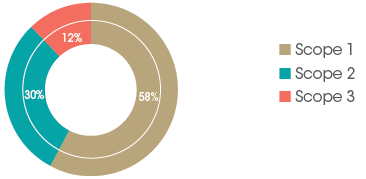
Compared to the previous financial year, the Group’s overall GHG emissions decreased by 7% (excluding Ceramic Industries and Ezee Tile). This reduction is primarily attributable to a decrease in emissions from purchased electricity and upstream transportation and distribution. However, the acquisition of Ceramic and Ezee Tile has resulted in a significant increase in the Group’s carbon footprint. Scope 1 accounts for the bulk of the Group’s emissions at 58%. The majority of these emissions emanate from process-related emissions at Ceramic. The consumption of fuel in company-owned kilns, dryers and generators also contributed to high emissions under scope 1. Purchased electricity at company-owned sites accounted for the 30% of the Group’s total emissions, the majority of which were also from Ceramic. The largest source of emissions under scope 3 was derived from transportation and distribution services sourced by the Group. |
| Retail operations | |
| 2017/18 priorities | Scorecard |
|
|
|
|
|
|
|
|
|
|
| 2017/18 major achievements | |
| Water |
|
| Energy |
|
|
|
| 2018/19 priorities and prospects | |
|
|
| Manufacturing plants |
| Ceramic Industries’ factories use latest technology to ensure efficient production. Gas consumption is reduced though the use of state-of-the-art burner technology and heat recovery systems that heat combustion air. Process water is recovered and reused, ensuring no effluent leaves the factories. Natural lighting techniques and new-generation LED lighting has replaced less efficient lighting in many places in the factories. Large solar generation systems have been installed in Australia and at the sanitaryware site in South Africa. Concurrent rehabilitation of raw material quarries is conducted and quarries are rehabilitated once end of productive life is reached. |
| Water management: Our factories rely primarily on water from boreholes and municipalities for production. It is for this reason that our existing boreholes are registered with the Department of Water and Sanitation and we are in the process of registering new ones. We conduct monthly water monitoring on site to detect our potential impact on the environment and also conduct groundwater level monitoring to determine how much we are consuming from our natural resources. Furthermore, our factories are designed to maintain a closed loop system which means that most of our water is recycled right through the process and lost through evaporation. In the effort to enable our factories to operate environmentally efficiently, we have active water treatment plants at some of our factories which make it possible to clean and reuse our dirty processed water; we also operate water reticulation plants which treat borehole water to supply the factories. These initiatives all reduce the reliance on municipal water. |
| Waste management: We aspire to comply with the hierarchy of waste management by preventing, minimising, recycling and recovering, with disposal being the last option. This approach applies to all waste that could potentially emanate from our production process and domestic waste which is generated on a day-to-day basis. Some of the initiatives that have been implemented at the factory include recycling of heat, raw materials and process water which all feed back into the process. We also have a waste management system which separates waste at the source and aims to dispose of as little waste as possible. This is an ongoing project which continues to improve over time. |
| Air management: One of our biggest challenges is the emission of dust resulting from the type of raw material used in the production process. This is a risk both inside the factory and to the external environment. Our factories have been equipped with baghouses and wetscrubbers which ensure that dust has been minimised or eliminated at areas where a risk has been identified. In line with our occupational health and safety standards, we assess and monitor occupational hazards and implement mitigating measures. While our monitoring focuses on a variety of potential gases including HF, SO2, CO,2, NOx, etc, over the years the results have proven that our risk is very low. |
| Energy consumption: We have started rolling out solar panels at the factories, aimed at reducing our reliance on electricity, which will ultimately reduce the carbon footprint. The Company has over the years also invested in technology and robots within the process, which not only improve productivity, but have an indirect positive impact on the environment. Other changes in the factory including motion sensors, heat recovery, and light bulb retrofitting will eventually add up to a notable saving in energy and costs. |
| 2017/18 major achievements |
|
| 2018/19 priorities and prospects |
|
The Group aims to intensify efforts to decrease its GHG emissions in order to reduce its environmental impact and contribution to climate change. In addition to advancing the roll out of renewable energy, both in stores and in the manufacturing plants, there will be a new focus on the implementation of carbon offset projects. In addition to community-linked environmental projects, the Group’s broader corporate social investment programmes focus on education, entrepreneurship, welfare and conservation. The corporate social responsibility narrative of the Corporate governance report outlines in detail the charitable activities of the Group during the year. |
Human resources
and training
Overview and performance matrix
Nature of business
Add value through recruiting and retaining fit-for-purpose personnel. Develop and empower the Group’s human capital resource through relevant training and support.
Provide an efficient payroll and administration function.
| Target audience |
| Support Centre, franchisees and employees |
| Key performance indicators | Trends 2018 | Trends 2017 |
|
|
|
|
|
|
|
|
|
|
|
|
|
|
|
|
|
|
|
|
|
| 2017/18 priorities | Scorecard |
|
|
|
|
|
|
|
|
| 2017/18 major achievements |
|
| 2018/19 priorities | 2018/19 prospects |
|
|
Group outlook
Boosting the economy sustainably, improving household prosperity and rebuilding consumer confidence to translate into positive investment sentiment are key to the growth of our industry. For the foreseeable future until such factors as high unemployment and indebtedness, prevailing evidence of corruption and policy uncertainty regarding key issues are addressed, the consumer will remain under pressure and negatively disposed, and homeowners will continue to defer discretionary spend on their properties.
We anticipate that our first-half results for the new financial year will be better than the comparable first half of the prior year, due to the low base effect. Results in the second half of the year are expected to be less robust than the second half of the year under review, unless country-specific risk factors reduce materially.
Our goal for the new financial year will be to continue to deliver improved headline earnings growth.
While the short to medium-term socio-economic forecast is pessimistic, we remain confident that our resilient business model will stand us in good stead, as it has done over the past 50 years. We are optimistic that there are opportunities within the business which we can capitalise on and we have a competent team with clarity of purpose and strategy to achieve our growth targets.
We have identified our future focus areas and will benchmark our performance over the next year against them in the 2019 Integrated Annual Report.
They include the following imperatives:
- Grow sales across the brands (through entrenching retail excellence), which will have a positive knock-on effect in the supply chain;
- Continue to improve working capital and manage margins through robust cost leadership;
- Build on our reputation for retail innovation and disruptive technology (both in-store and online);
- Accelerate the Group’s growth in select markets in Africa (spearheaded by our new CTM venture in Tanzania, and Ezee Tile’s new plants). We will also cautiously explore other retail opportunities for expansion in Kenya, Rwanda and Uganda;
- Advance the store roll out programme, targeting 10 to 15 new stores;
- Progress improvements made in building a pipeline of talent;
- Build depth of management, while simplifying the business model and limiting costs, by creating opportunities for topachieving CTM franchisees to expand their territories to become multistore franchisees;
- Make better use of analytics to inform targeted customer marketing and reward campaigns;
- Progress the supply chain journey. Leverage opportunities to link our manufacturing and retail operations by streamlining and upgrading our distribution and logistics functions;
- Upweight our marketing and brand building initiatives and broaden our capability in the digital and social media environment; and
- Increase open market business for all integrated suppliers.
Appreciation
I would like to pay special tribute to the Group’s founder and Chairman, Giovanni Ravazzotti, in this historic year, which sees us celebrating the business’s 30th anniversary since listing and commence our 50th year of trading. These milestones are testament to the personal traits which define him, and in turn have moulded the culture of this company: his ambition, innovation, integrity, humility and the understanding that partnership and empowerment are fundamental to building a successful team.
Mr Ravazzotti’s exceptional vision and hands-on management over the past 50 years have been instrumental in growing this business from a small start-up in 1969, to the enterprise it is today, comprising three retail brands, represented by 176 stores (including webstores) in South Africa and the rest of Africa, an integrated supply chain, substantial manufacturing assets both locally and in Australia, and an employer of 2 530 people across our operations.
On behalf of everyone in our business I would like to congratulate him on his immense achievements over the past five decades.
The year under review has been another challenging one, with trading conditions testing the finest operators. After a disappointing start to the year, the business delivered a much improved second half, and I would like to thank the people of Italtile for their commitment and continued determination to constantly improve their performance and attain our robust targets. Resilience and resourcefulness are key characteristics of the team and I look forward to working with you to advance our mission to be the world’s leading retailer of tiles, sanitaryware and ancillary products.
Finally, my appreciation is extended to my fellow Board members for their valuable contribution and support for our efforts to meet and exceed the expectations of all stakeholders.
J N Potgieter
Chief Executive Officer

“This Company teaches us business skills and how to grow. We are constantly encouraged to be the best and never settle for less.”
Story of Melvyn Jansen
Melvyn Jansen joined Italtile Retail in 1991 as a truck assistant. After working for two years as a driver, he was promoted to showroom tiler. At the same time, he started serving as a trainee salesperson on weekends, which he enjoyed and excelled at. Recognising his talent, management promoted him to the temporary position of sales consultant, for a six-month trial period. His success in this role resulted in him being appointed permanently to the sales team. In those days, Melvyn says, the sales people also had to tile the display boards – whereas today selling is regarded as a specialist skill and a lot of focus is spent on ensuring consultants are equipped to manage customers as professionally as possible.
Melvyn loves working for the Group because he believes management always puts their employees first. Besides making sure to provide basic employment benefits such as medical aid – which many other companies do not provide – employees also participate in the profit share scheme.
A key lesson he has learnt in the Group, is that teamwork is important to achieve the best results. Melvyn says the Company is transparent and shares all information with the teams so that individuals are empowered and take part in the decision-making process. He adds that he has huge respect for his managers who have mentored him and afforded him with the opportunities to become part of a successful team.
| Date: | 16 November 2018 | |
| Time: | 08:00 | |
| Venue: | The Italtile Building, Corner William Nicol Drive and Peter Place, Bryanston |
20 August 2018
FY18 Year-End Results
16 November 2018
Annual General Meeting
| Address: | The Italtile Building Cnr William Nicol Drive and Peter Place Bryanston 2021 |
|
| Tel: | +27 (0) 11 510 9050 | |
| Email: | english@investorcommunications.co.za |